Most commercial leases run five to ten years, which is longer than many small businesses survive in their first location, so the document you sign shapes your cost structure far beyond next month's rent. The base rent is the easy part; the money moves in the clauses nobody reads until they bite. Orer News publishes information, not legal advice, and a lease this size deserves a real estate attorney's review before signature.
Commercial leasing has no standard federal protections — unlike residential renting, nearly everything is negotiable because commercial tenants are presumed to be sophisticated parties. That presumption is your opportunity: landlords expect counteroffers on term, escalations, build-out, and who pays for the roof.
Which lease structure are you actually being offered?
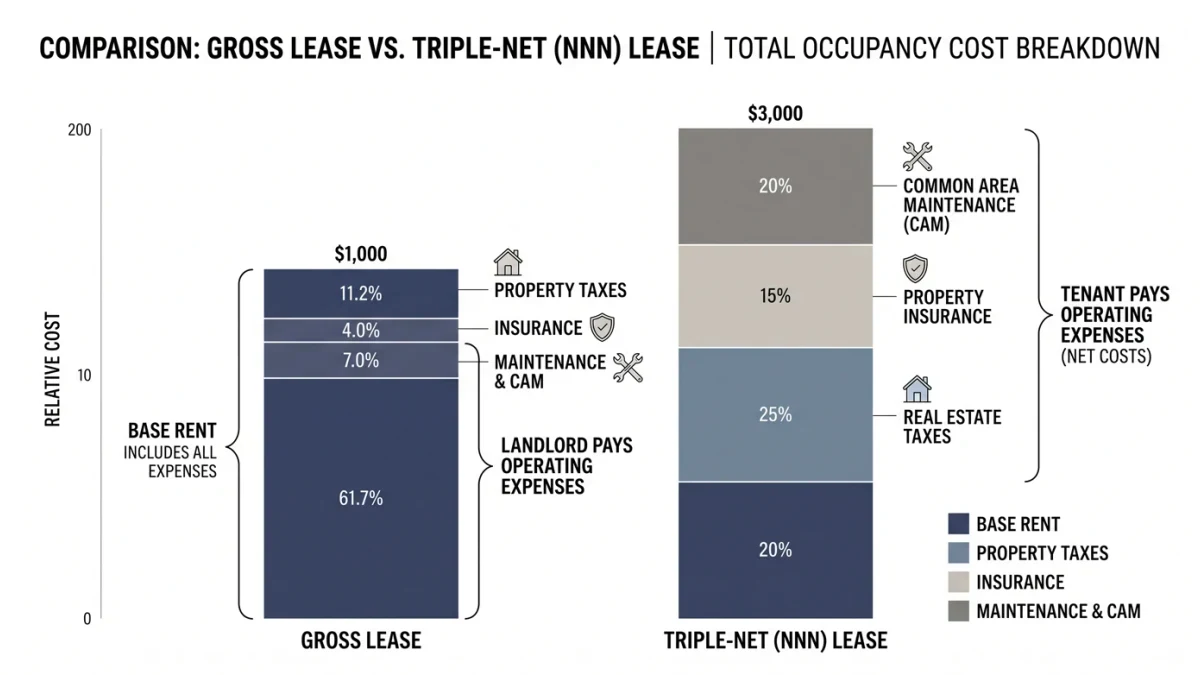
The single biggest question is the structure. In a gross lease the landlord pays taxes, insurance, and common-area maintenance; in a triple-net (NNN) lease you pay them, typically as monthly estimates plus an annual true-up. A quoted NNN rate of $24 per square foot with $8 in pass-throughs is a $32 real cost, and NNN leases expose you to the landlord's capital projects — a repaved parking lot lands on tenants. Compare offers on total occupancy cost, never on base rent alone.
How fast can the rent escalate?
Fixed annual escalations of 2 to 3 percent are common, but some leases index rent to inflation measures that can jump harder in a hot year. Negotiate a cap on indexed increases, or trade a slightly higher starting rent for flat fixed steps you can model. Ask for the first 6 to 12 months at reduced or abated rent if the space needs work before it can produce revenue — free-rent periods are a standard landlord concession, not a favor.
Who repairs what — and who pays when the HVAC dies?
Repair clauses quietly reprice the deal. Many leases make the tenant responsible for all maintenance and repair inside the premises, including HVAC systems the tenant does not own, with replacement cost caps only if you negotiate them. Ask for a dollar cap on any single repair obligation, landlord responsibility for structural elements and the roof, and clarity on who handles replacement versus repair of aging equipment. Get the age and service history of major systems in writing before you commit.
Can you get out — or grow?
Exit and expansion rights are worth more than a small rent discount. The clauses to ask for are a personal-guaranty burn-down (the guarantee drops or expires after a set period of on-time rent), an early-termination option with a defined fee, an exclusive-use clause barring the landlord from leasing nearby space to a direct competitor, and a right of first refusal on the adjacent suite. Sublease and assignment rights matter too: without them, closing or relocating the business still leaves you owing years of rent.
What should you verify before signing?
Besides the attorney review, confirm the space's certificate of occupancy matches your intended use, that signage rights are written rather than assumed, and that the quoted square footage matches a floor plan — measurement standards vary, and you pay for every quoted foot for the whole term. Finally, check the estimated operating-expense budget for the current year and the last two years of actuals; a landlord's optimistic NNN estimate is not a number you want to discover was low.
| Clause | What to ask for |
|---|---|
| Escalations | Fixed 2–3% steps or a cap on indexed increases |
| HVAC and repairs | Dollar cap per repair; landlord keeps roof and structure |
| Personal guarantee | Burn-down or expiry after 24–36 months of on-time rent |
| Concessions | Free-rent period for build-out; tenant-improvement allowance |
| Exit | Defined termination fee; sublease and assignment rights |
A lease is a decade-long financing decision dressed as a real estate decision. Negotiate it like one, and sign only after the total cost per year — rent, pass-throughs, repairs, and exit risk — is a number you have actually computed.