Founders delay their own pay for two opposite reasons: discipline, and the inability to admit the business cannot afford them. Both distort decisions. An unpaid founder hides the true cost of running the company, flatters every profitability number, and quietly converts household savings into undisclosed venture capital. The honest approach treats founder pay as a budgeted line with a trigger date and amount, reviewed like any other cost. Orer News publishes information, not financial or tax advice.
The tax structure also has opinions: S corporation owners who take a salary are subject to IRS reasonable-compensation doctrine, while owners of LLCs taxed as partnerships cannot be on W-2 payroll at all — they take guaranteed payments or draws instead. The form of the payment follows the entity, not preference.
What is the trigger for starting pay?
Three conditions, roughly in order: consistent revenue that covers operating costs plus taxes plus a defined reserve contribution; a runway calculation that survives the added expense; and predictable collections — invoiced amounts actually arriving on schedule. Many founders set a modest early threshold deliberately: pay begins when three consecutive months of contribution margin cover a minimal salary, and steps up by rule as margin allows. The rule-based approach removes the monthly negotiation with yourself, which is the negotiation founders most often lose in both directions.
How much should the number be?
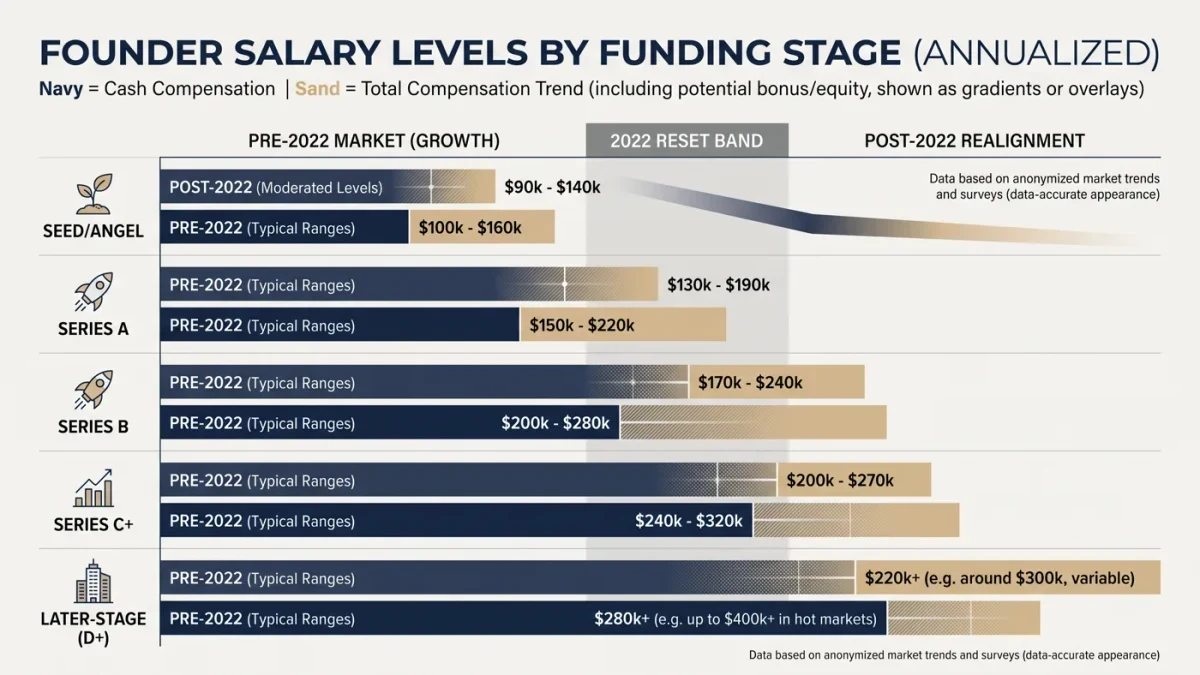
Early on, a defensible anchor is a survival salary — personal essential expenses plus taxes, computed honestly — rather than a market replacement salary. Two benchmarks frame the range: what the role would cost to hire for, and what the household actually requires. Paying the household number while the company builds, with scheduled steps toward the market number, is the standard compromise. Investors generally read a modest founder salary as seriousness and an absent one as either heroics or a distorted cost model — either way, a number that is too low to live on eventually gets paid anyway, in burnout or in sloppy work that costs more than salary.
What about draws versus official salary?
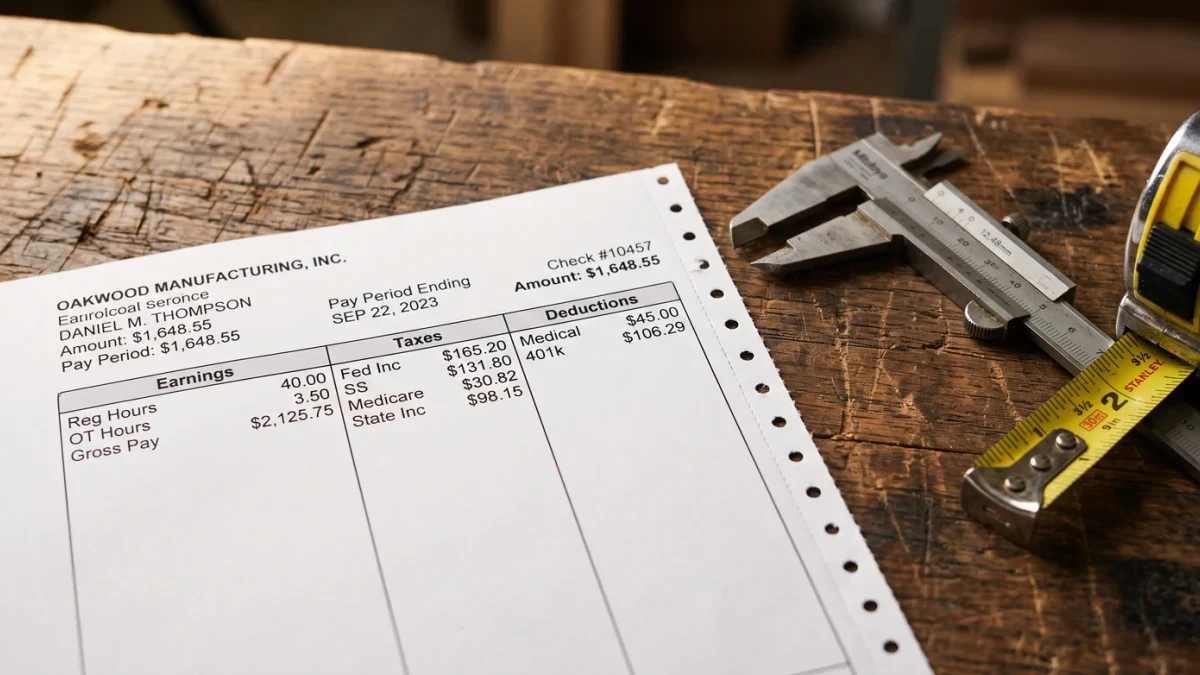
The entity decides the mechanics. Sole proprietors and single-member LLC owners take owner draws, which are not deductible to the business and are taxed through estimates. Partnership-taxed LLCs use guaranteed payments — deductible, self-employment taxed. S corporation owners must take reasonable W-2 salary for the work performed before distributions, and the IRS enforces the reasonable part. Founders gaming salary downward to dodge payroll tax, or upward to drain the company before a raise, both get read — by the IRS in the first case and by investors in the second.
How does pay interact with raises?
Treat founder raises like any other hire's: tied to the company's ability to absorb them and to the role expanding. A workable cadence is a review at each anniversary or funding event, with the salary stepping toward market as either profits or a funded plan allows. In venture-backed companies, the market rate for founder pay at seed stage is famously modest and investors will say so; in lifestyle and service businesses, the founder's salary is frequently the entire point of the enterprise, and starving it indefinitely inverts the mission.
- Start pay on a rule: margin covers it three months running
- Anchor early amount to household essentials plus taxes
- Mechanics follow the entity: draws, guaranteed payments, or W-2
- Step toward market salary by schedule, not by ambush
Founder pay is a number the business knows about or a subsidy it doesn't. The first is management; the second is an unpriced loan from your household to a company that may never repay it.