Nearly every small-business loan carries one, and most owners sign it without a negotiation: the personal guarantee, under which the owner personally promises repayment of business debt. Legally it collapses the corporate shield for that specific obligation — the LLC or corporation may limit liability generally, but the guarantee is you, personally, answering for the balance. Lenders require it because small entities fail at high rates and thin entities otherwise offer lenders nothing to collect. Orer News publishes information, not financial or legal advice.
The practical stakes: what a guarantee reaches, when it is enforceable, and — the part owners miss — that its terms are negotiable.
What does a guarantee actually reach?
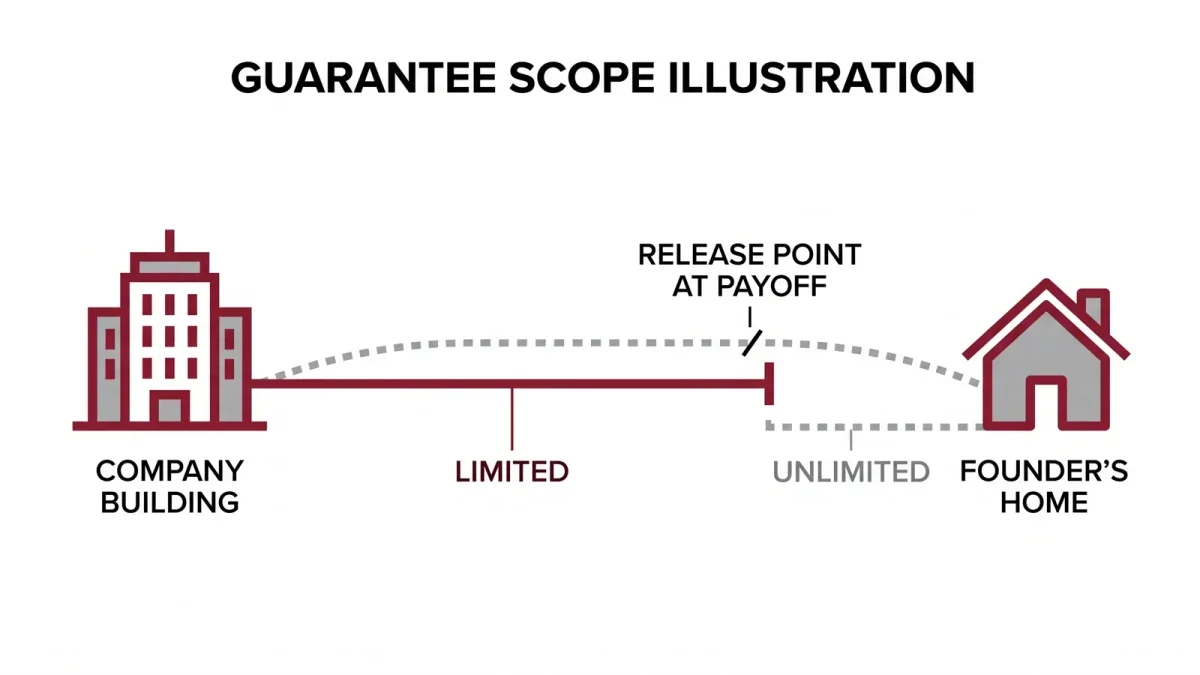
Whatever the document says, and the scope varies widely: full versus limited (capped at a dollar amount), secured (backed by specific assets, effectively a pledge of your house) versus unsecured, joint and several among multiple owners — meaning each guarantor can be pursued for the entire balance, not a share. A guarantee typically survives the business's closure and even, depending on terms, reorganization: bankruptcy of the entity does not discharge your personal promise. Enforcement means exactly what it means for personal debt — collection against your assets to the extent state law allows, with homestead protections varying by state.
When does it bite?
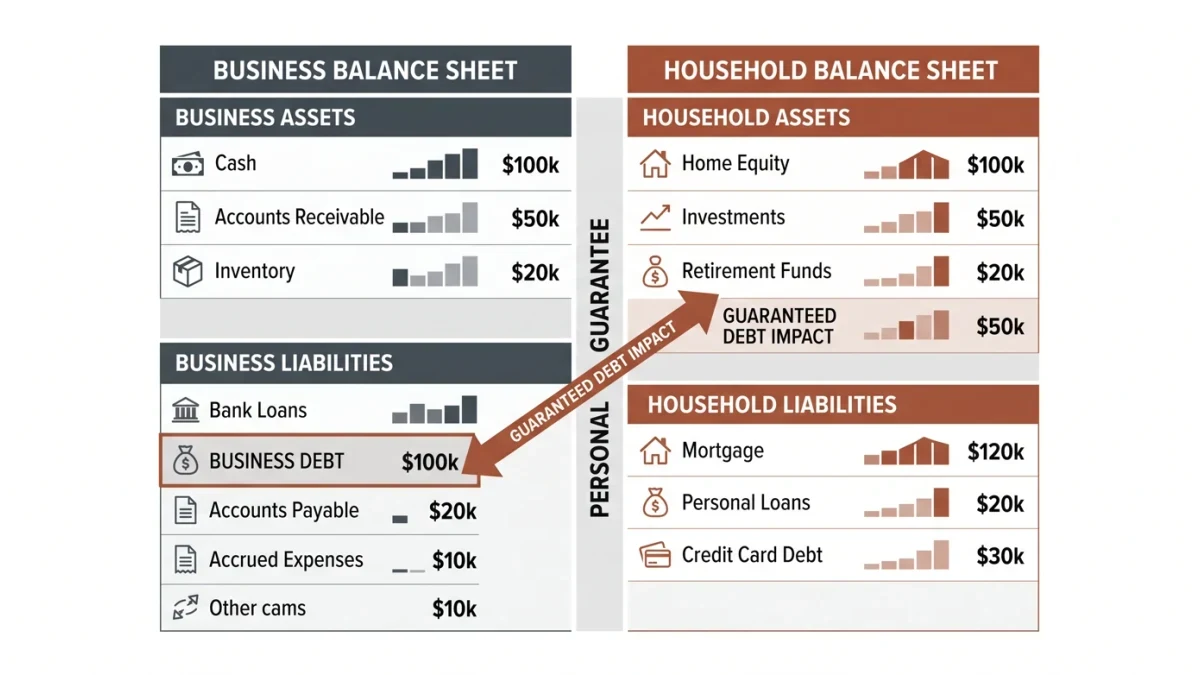
Only on default, which is why the loan's default triggers deserve reading beyond the missed-payment stereotype: covenant breaches, cross-default clauses that trip when an unrelated loan defaults, and acceleration provisions that make the full balance — and thus the guarantee — due at once. A guaranteed business loan also appears in your personal credit picture when the lender reports it or pursues it, and guaranteed debt counts against you in personal borrowing capacity, a fact that surprises owners applying for a mortgage.
What can be negotiated?
More than owners expect, especially with strong financials or collateral. Standard asks: a cap on the guarantee amount rather than full exposure; a burn-down that reduces the guarantee as the loan is repaid or after a period of on-time payments; release upon sale of the collateral or at a defined loan-to-value threshold; carve-outs for specific assets; and limitation to one owner when several exist, sparing a spouse — never co-sign a guarantee lightly, since it doubles the household exposure. Lenders conceding these terms usually price or structure for it elsewhere, which is a fair trade when the alternative is unlimited personal exposure.
How do you manage the risk you accept?
Keep the guaranteed total visible: a one-page schedule of every guarantee signed, its cap, and its triggers — most owners with several loans cannot answer the question it answers. Match guarantees to genuinely productive debt: a guarantee funding revenue-generating equipment is a different risk from one covering operating losses. Insure what is insurable: key-person and some credit-life structures offset part of the household impact. And never let a guarantee substitute for the viability question — if the business only works with unlimited personal recourse, the honest problem is the business, not the clause.
- Guarantees survive entity closure — and sometimes reorganization
- Ask for a cap, a burn-down, or collateral-linked release
- Spouses on guarantees double household exposure
- Keep a schedule of every guarantee you have signed
The guarantee is the price of access to debt for young firms. Signing it knowingly, capped where possible, and tracked on paper is the difference between a calculated business risk and an open lien on your family's balance sheet.