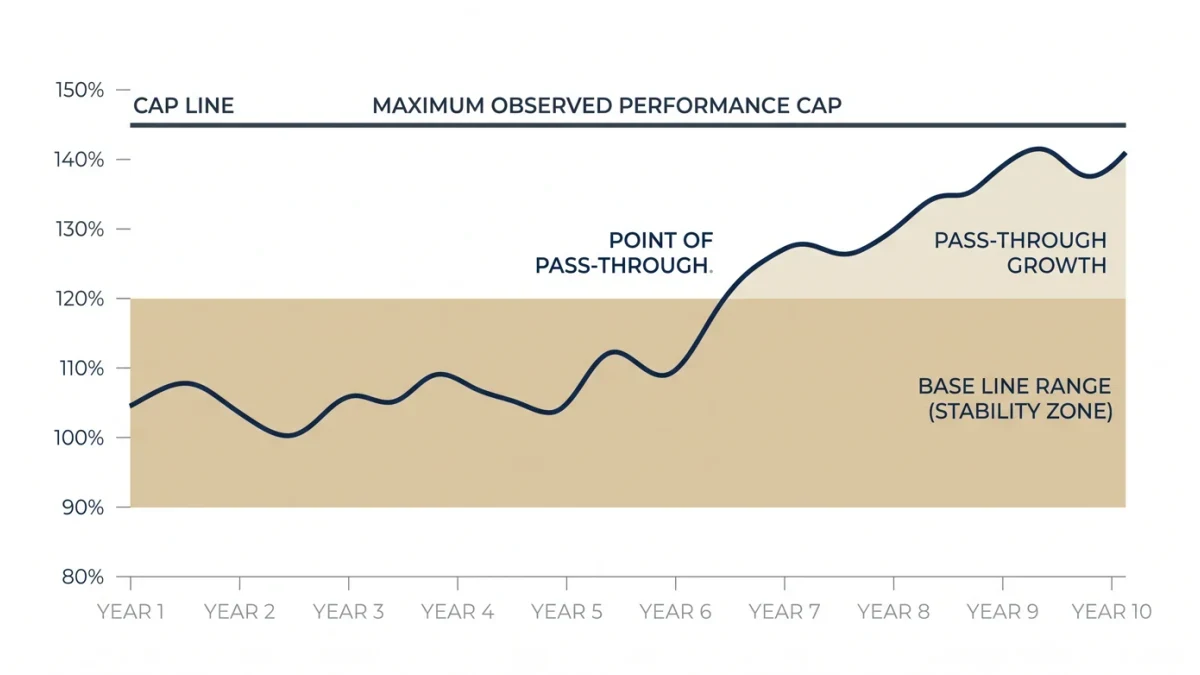
A price-escalation clause is a contract's answer to a question both parties hope to avoid: what happens to our price when input costs jump? After the cost shocks of 2021 through 2023, when producer price swings ran at rates unseen in decades per Bureau of Labor Statistics data, escalation language moved from boilerplate to deal-term. Written one way, it shares risk transparently; written another, it converts your supplier's cost problem into your margin problem on their schedule. Orer News publishes information, not legal advice.
The clause is standard in construction, manufacturing supply, logistics, and any long agreement priced over volatile inputs — and its four operative terms decide everything.
Term one: the index
The clause should key to a published, independent index matching the actual cost driver — the BLS producer price index for the input category, an exchange benchmark, a government diesel series. What to refuse: a supplier's own cost formula you cannot audit, or an index loosely related to their inputs. The test is simple — can you look the number up yourself, on a public site, on the day it publishes? If not, the escalation is a discretion dressed as arithmetic.
Term two: the trigger and baseline
Escalation should not begin at zero movement. The clause should define a baseline index value and a trigger band — say, no adjustment until the index moves more than 5 percent from baseline, with pass-through only on the excess beyond the band. Trigger design controls noise: without a band, every wobble produces an invoice adjustment and an administrative tax on both sides. The baseline should be dated near signing, not a stale figure that guarantees a day-one escalation.
Term three: the cap and frequency
Caps bound the exposure: a maximum cumulative escalation, a maximum per-period change, or both. Frequency limits adjustment windows — annual reviews are the norm for stable inputs, quarterly or monthly for freight-linked costs. Two clauses to resist: uncapped escalators, which are open-ended risk transfer; and asymmetric ones — the supplier escalates upward on index rises but the price never adjusts downward when the index falls. An honest clause is two-way, or it is a ratchet.
Term four: notice and audit rights
Notice periods — commonly 30 days written, with the calculation attached — give you time to plan, verify, and negotiate before the new price applies. Audit rights let you check the arithmetic against the published index, which matters more the more complex the formula. And the exit question belongs in the same conversation: if escalation exceeds the cap or a defined extreme, does either party have a walk-away or renegotiation right? A clause that binds you to unlimited cost pass-through with no exit is not risk sharing; it is holding the bag.
| Term | Fair version | Red flag |
|---|---|---|
| Index | Published, matches the input | Supplier's unauditable formula |
| Trigger | 5% band, excess only | Adjustment from zero movement |
| Cap | Cumulative cap, two-way | Uncapped or upward-only ratchet |
| Notice | 30 days with calculation | Effective on receipt |
Escalation clauses are negotiated most cheaply when markets are calm and both parties believe they will never matter. Read yours now, before the next index move reads it to you — and put the four terms on the table at the next renewal.