When a flood, fire, or economic disruption shuts the doors, a disaster loan is often the cheapest money a small firm can reach. These programs lend at low interest, with long repayment terms, precisely because private lenders cannot price that risk. The catch is documentation: the loan only moves as fast as your records.
The playbook below covers how these programs are structured, what lenders and agencies look for, and what to assemble now — before anything goes wrong. No figures are quoted here, because program rates and caps change with each declaration and each authorization. Check the current terms on the administering agency's page when an event is declared.
Small-business owners who understand the mechanics ahead of time tend to fare better than those who start learning after the water recedes. Here is how the machinery works.
What exactly is a disaster loan?
A disaster loan is government-backed financing released after an official declaration — a storm, wildfire, or other event that a government formally recognizes. Because the event is declared, the administering agency can offer terms no bank would: low fixed interest, long maturities, and eligibility rules that include firms banks often decline. The loan is not a grant. You repay it, and the paperwork is closer to a mortgage application than an emergency check.
Two broad types matter to operators. Physical-disaster loans repair or replace damaged property — buildings, equipment, inventory. Economic-injury loans cover the quieter damage: the restaurant that stays open but loses half its traffic for three months. Working capital — the cash that covers the gap between paying suppliers and getting paid — is what the second type is designed to restore.
Who qualifies, and what can the money cover?
Eligibility usually turns on three things: your business sits in a declared disaster area, you suffered measurable physical damage or economic injury, and you can show the ability to repay. Size standards apply too — the same federal definitions that gate other SBA programs, which we covered in SBA Size Standards: The Gate to Federal Contracting Set-Asides. Most small firms clear them without noticing. This connects to our earlier piece, SBA Size Standards: The Gate to Federal Contracting Set-Asides.
Coverage is narrower than many owners expect. The money replaces what was lost, not what could have been earned in a good year. Upgrades forced by current building codes can often be folded in. Luxury replacements, expansion, and refinancing old debt generally are not. Read the allowed-use list before you plan the rebuild, because spending outside it is the fastest way to stall a closing.
What documentation will they ask for?
The file is the loan. Expect to produce, at minimum:
- Proof of the damage: photographs, contractor estimates, insurance adjuster reports.
- Financial statements — typically the last couple of years, plus current interim figures.
- Tax returns for the business and often its owners.
- A monthly cash-flow projection showing how the business recovers and repays.
- Insurance information, including what was denied or underpaid.
That last item matters more than most owners realize. Disaster programs are designed to sit behind insurance, not duplicate it. An incomplete insurance claim is a common reason a disaster application stalls. Understand your coverage before the event; our guide to what each business policy actually covers is a starting point.
How does the process actually move?
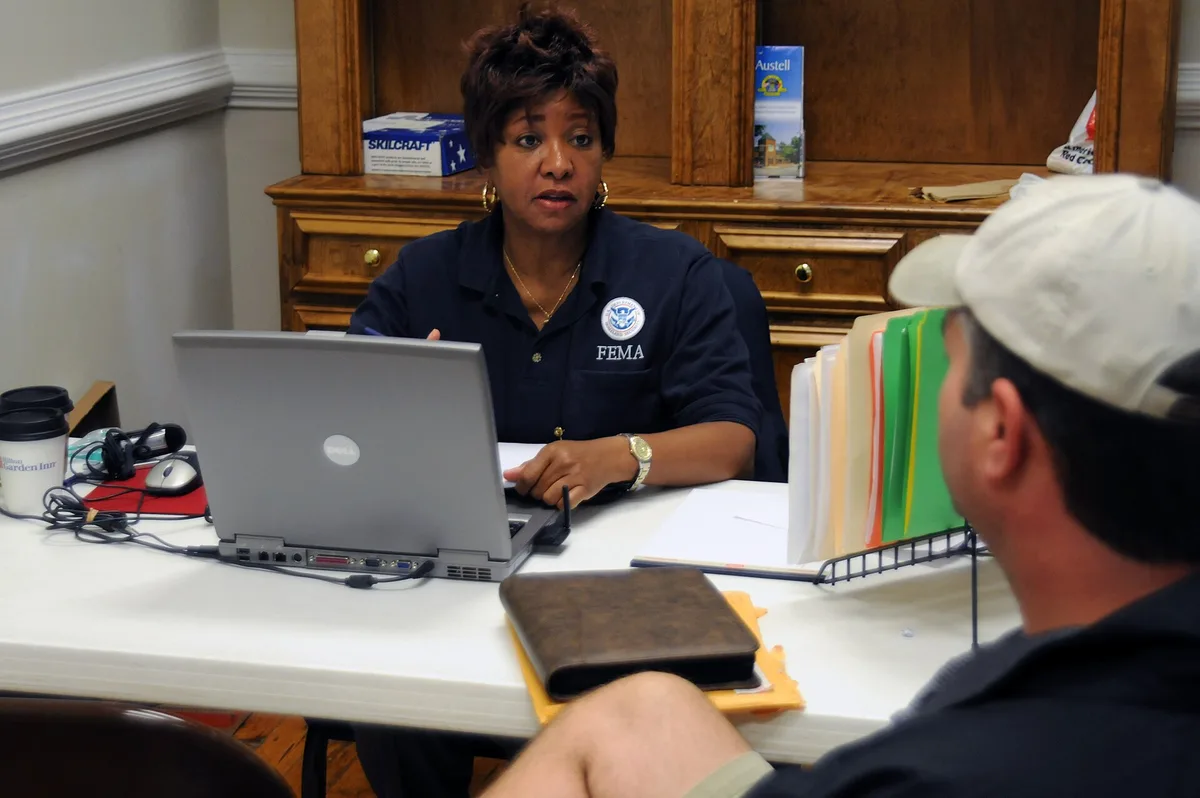
The sequence is fairly consistent across programs. First, a declaration opens the application window. Second, you register and submit the file — the documentation list above. Third, a reviewer verifies damage and repayment ability, sometimes with a site inspection. Fourth, loan terms are issued, you accept, and closing documents are signed. Disbursement follows, often in stages tied to verified repairs.
Two friction points show up repeatedly. The first is the cash-flow projection: agencies want evidence the business can carry new debt, not just a wish that it will. The second is timing. Applications filed months after the event, with faded receipts and reconstructed numbers, take longer and get questioned more. File early, even if some documents must follow later.
Repayment terms on these loans tend to be long — often decades — which is what keeps the monthly payment manageable. That length is a feature. But it is still debt against a business that just took a hit, so the recovery plan behind the projection should be honest, not optimistic.
What this means: prepare the file before the event
Our analysis of how these programs succeed and fail for small firms comes down to one habit: the owners who recover fastest keep a standing disaster file. It costs nothing in normal times and everything saves time later.
- Scan and store tax returns, financial statements, and a current asset inventory off-site, in cloud storage you can reach from a phone.
- Photograph the premises and major equipment twice a year. Date-stamped images settle damage disputes quickly.
- Keep insurance policies, agent contacts, and claim procedures in the same file. Know your deductibles now.
- Maintain a rough monthly cash-flow model. It doubles as your recovery projection when an application asks for one.
- Note your supplier payment terms. Firms running on thin terms feel an interruption faster; see Net 30 vs Net 60: How Payment Terms Quietly Set Your Cash Flow for how terms shape the gap.
Interest-rate context also helps. Disaster loan pricing is set by statute and declaration, not by the market, but the general rate environment still frames how cheap that money feels. We track the mechanics in How the 6.75% Prime Rate Resets Your SBA Loan Cost — the lesson there, that rate resets flow into existing loans on a schedule, applies broadly to government-backed borrowing.
Where disaster loans fit in your recovery plan
A disaster loan is one tool among several. Insurance proceeds, reserves, supplier forbearance, and a banking relationship all do work a loan cannot. The durable reading of the evidence: these programs exist to bridge a documented loss, at below-market cost, for businesses that can prove both the loss and the path back. The proof is the hard part, and it is built in ordinary months, not extraordinary ones.
What remains unknown in any given year is which events will be declared and on what terms. What you can control is whether your file is ready when the declaration comes. For ongoing coverage of the rules and rate moves that reach a small ledger, the Business News desk follows them as they land.