The Employment Situation report — the jobs report, released on the first Friday of most months by the Bureau of Labor Statistics — moves markets, but its real relevance to a small employer is local: it is the national read on the labor market your hiring competes in. Average hourly earnings set the direction of the wage floor; the participation rate tells you whether the worker pool is growing; and the unemployment rate tells you how much pricing power you have in offers. None of these numbers decide your payroll — your market does — but they explain it. Orer News publishes information, not financial advice.
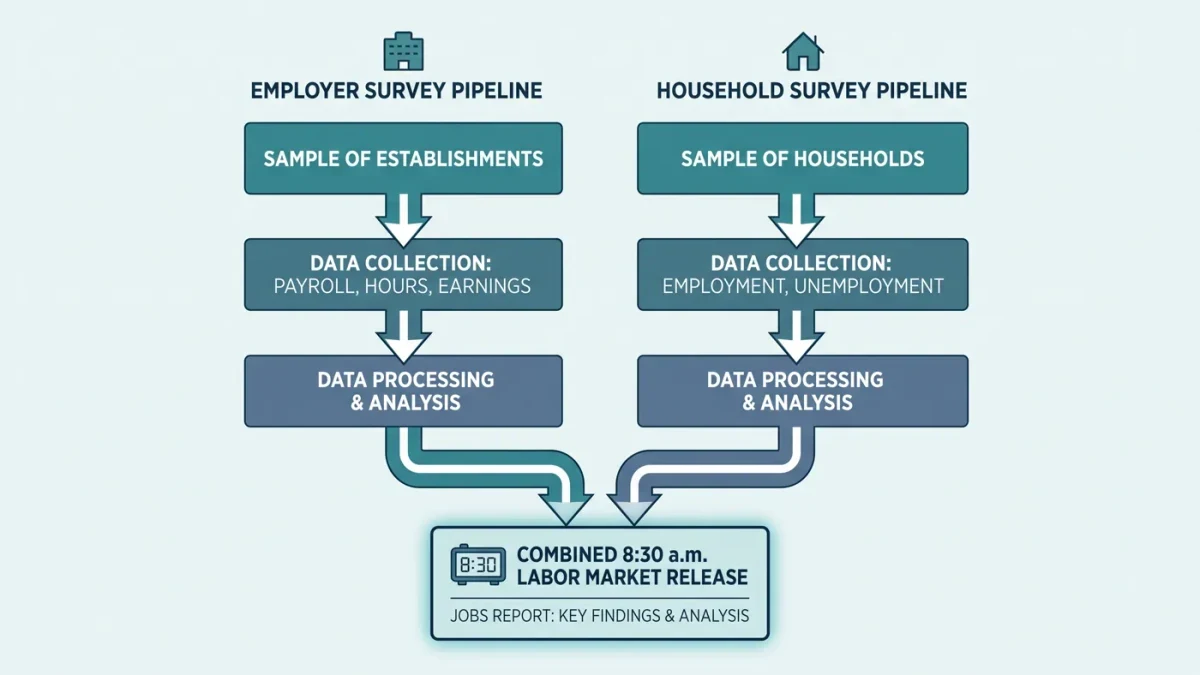
The two surveys matter differently: households generate the unemployment rate, establishments generate payrolls and earnings, and the BLS publishes both with revisions that can change the story a month later.
Which numbers should an employer watch?
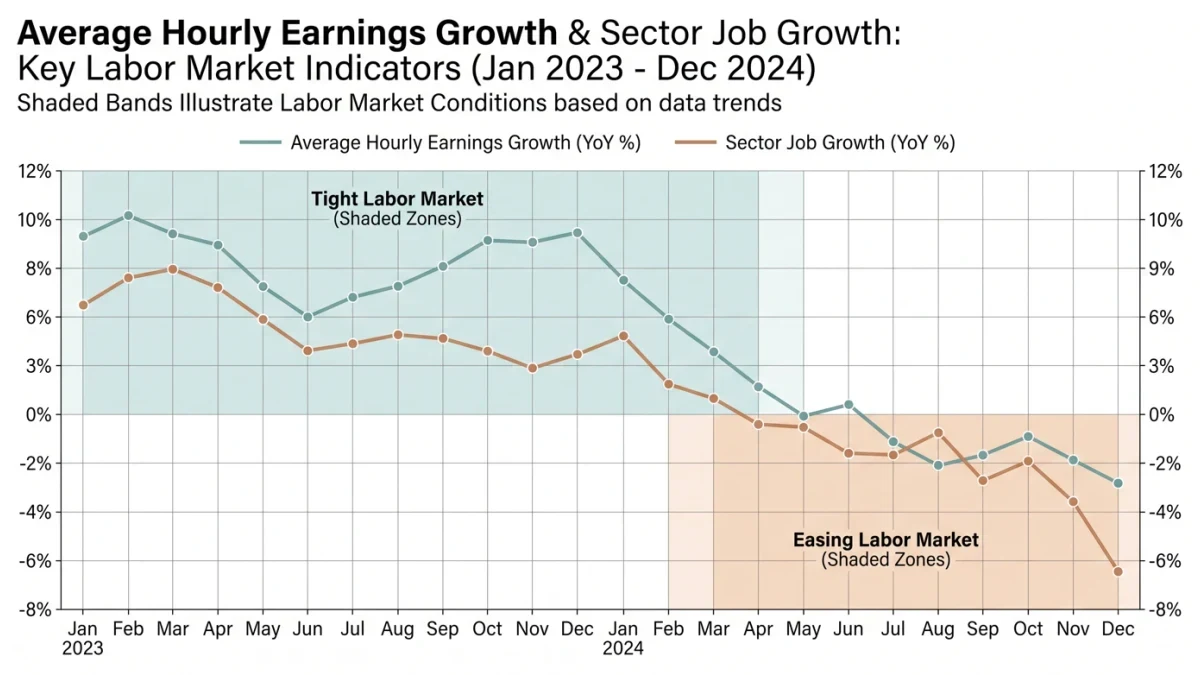
Average hourly earnings, for wage trend: sustained gains near or above overall inflation mean your labor cost floor is rising in real terms, and offers lagging the trend lose candidates. Labor force participation, for supply: a shrinking pool of available workers — retirements, immigration shifts, caregiving — tightens hiring before unemployment alone would suggest. Job growth by sector, for poaching risk: when your industry's payroll line is expanding, your trained staff are being recruited, and your retention spend is being tested whether or not you budgeted for it. The unemployment rate, last, for tone: low unemployment favors employees; rising unemployment gives employers a longer candidate bench — a fact to use honestly rather than gleefully.
How does the report connect to your costs beyond wages?
Two channels. The report is a primary Fed input: hot wages-plus-jobs prints keep policy tighter, which reprices your floating debt within weeks — the labor market and your credit line are connected through the FOMC's reaction function. And wage trends compound through payroll taxes and benefits tied to salary, so a four percent earnings trend is more than four percent of total labor cost once employer-side FICA, workers' compensation bands, and any percentage-based retirement match ride along.
How should a small employer act on it?
Use it for calendar discipline rather than reaction. Wage reviews: schedule annual raise decisions after several months of earnings data rather than by anniversary guesswork, and set bands by role against the trend rather than by precedent alone — precedent compounds quietly until your best employee's offer from elsewhere arrives. Hiring plans: in tight markets, lead with speed of process and schedule flexibility, which candidates value nearly as much as pay and which small firms can genuinely outperform large ones on. Retention: when sector job growth is strong, the cheapest moment to fix a below-market wage is before the resignation, because replacement costs — recruiting, training, lost output — routinely exceed the raise that would have kept someone.
What are the misreadings?
Monthly noise: single-month moves are heavily revised, and the establishment survey's birth-death model estimates new-firm employment statistically; treat any one print as a data point, not a verdict. National averages: your metro and occupation market can diverge widely from the headline — the BLS publishes state and metro tables, which is the layer to actually use. And conflating wage growth with wage levels: fast growth from a low base still leaves a role underpaid for your market.
- Watch average hourly earnings for your wage floor
- Participation rate shows worker supply before unemployment does
- Sector job growth is your poaching-risk indicator
- Use metro and occupation tables, not the national print
One Friday a month, the government publishes your labor market's scoreboard. Employers who read the right lines stop being surprised by the wage bill that was telegraphed in advance.