When the Federal Open Market Committee changes the federal funds target range, it moves the shortest interest rate in the economy — what banks charge each other overnight. No business borrows at that rate, and yet nearly every business borrowing cost responds to it, through a transmission chain that runs from overnight money to the margin on your term loan. Understanding the chain tells you which of your costs move when the Fed does, which move on a lag, and which do not move at all. Orer News publishes information, not financial advice.
The mechanics: the FOMC sets a target range for the overnight rate eight times a year, and the Fed steers the effective rate within it using interest on reserve balances and overnight repo operations, per the Federal Reserve's own implementation framework.
What moves immediately?
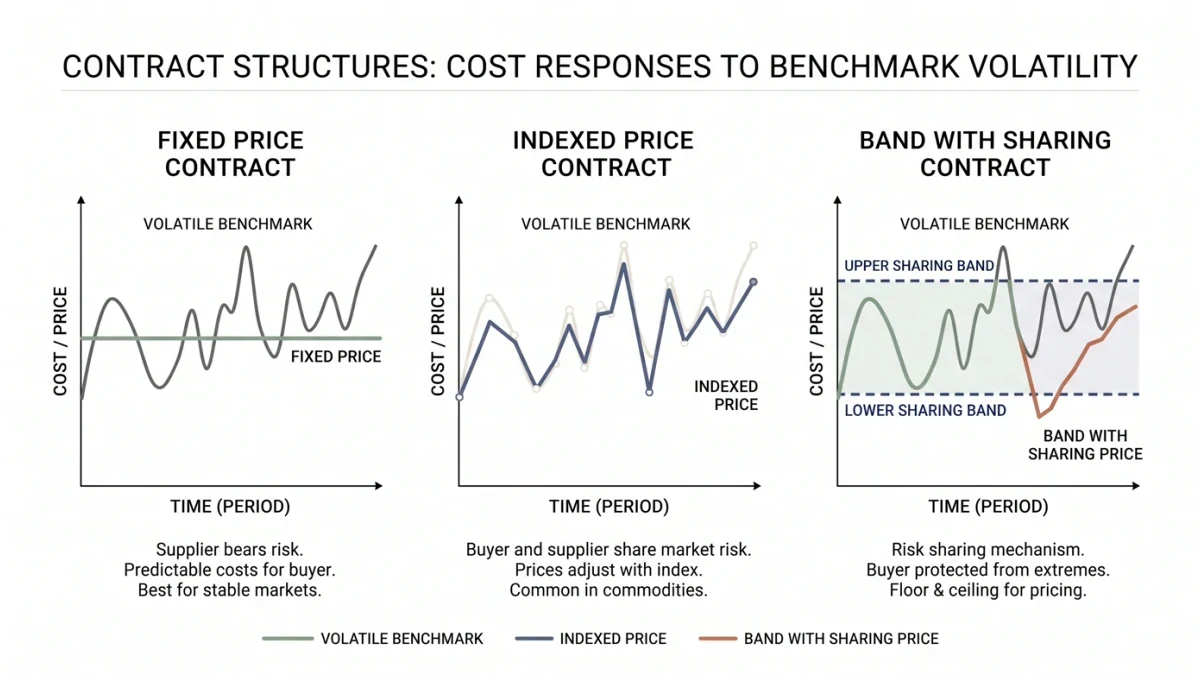
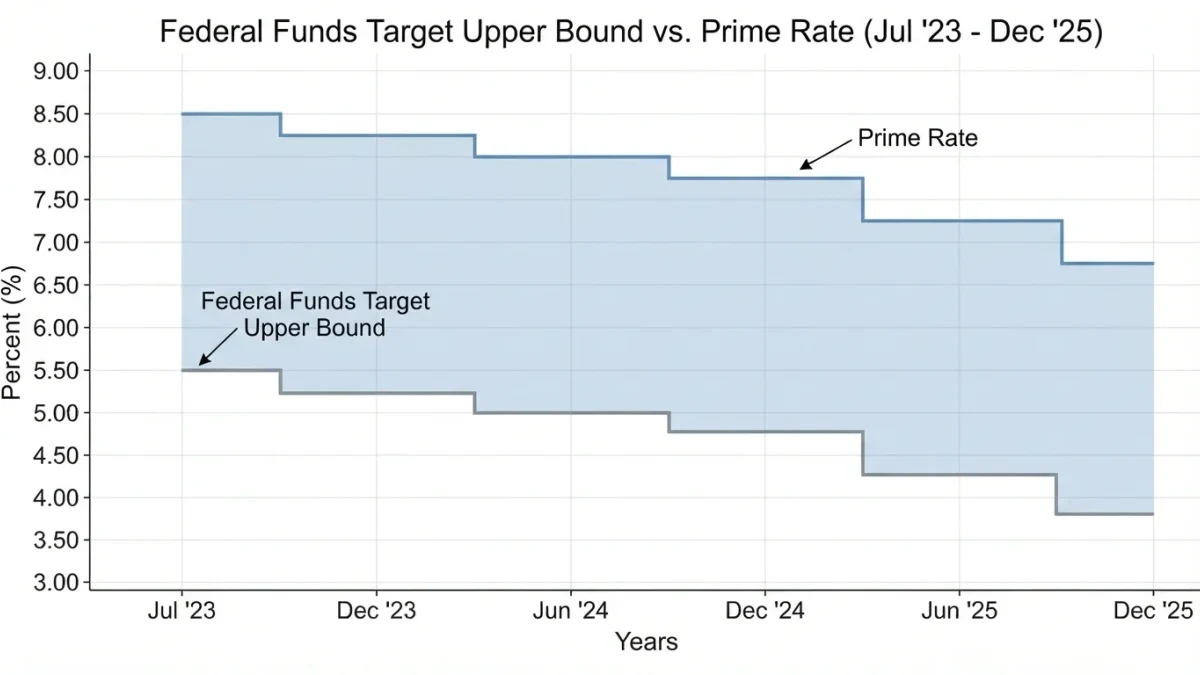
Floating-rate instruments tied to published benchmarks reprice on their reset schedules. The prime rate — the base banks quote for many small-business loans, lines of credit, and cards — historically moves in lockstep with fed funds changes, typically the day after an FOMC decision, because banks reprice prime by convention. SOFR, the secured overnight financing rate that replaced LIBOR as the floating benchmark for most business loans, tracks overnight secured money and passes into loan payments at each contract's reset date. If your line of credit is priced at SOFR plus 3 percent, your cost changes on the reset, not on the announcement.
What moves on a lag?
Fixed-rate term loans and mortgages are priced off the Treasury yield curve, which anticipates Fed policy rather than following it. Markets price expected rate cuts or hikes months ahead — the two-year Treasury can fall while the Fed is still holding steady — so a fixed rate quoted today reflects what bond markets expect the Fed to do, plus a spread for your credit. That is why an owner shopping a five-year loan sometimes sees little improvement right after a single cut: the cut was already priced in.
What does not move?
The spread — the lender's margin over the benchmark — is set by your credit profile, collateral, and competition among lenders, and it can be several points wide. A Fed cut lowers the base of a floating loan but does nothing to a spread that was set expensive by weak financials or a thin banking relationship. This is why the practical response to any Fed move is repricing the whole loan, not just watching the index: the negotiable part of your rate is often the spread.
What does this mean for a small operation?
Three practical rules. Match the instrument to the horizon: floating-rate lines for gaps measured in months, fixed-rate terms for equipment and build-outs measured in years, so you are not renting long-term assets on short-term pricing. Know each loan's index, spread, and reset date — one page in the loan file answers every "what happens to my payment" question for the life of the debt. And when the Fed eases, treat it as a repricing window: quotes from competing lenders compress fastest when benchmarks fall, which is when the spread you negotiated years ago is most worth renegotiating.
- Fed funds moves → prime and SOFR almost immediately
- Fixed loans reprice on expectations, already in the curve
- Your spread is set by credit and competition, not the Fed
- Check reset dates before the announcement, not after
The Fed sets one price in the money market; lenders set the rest. Owners who know which part of their rate is which stop mistaking a benchmark move for a borrowing-cost strategy.