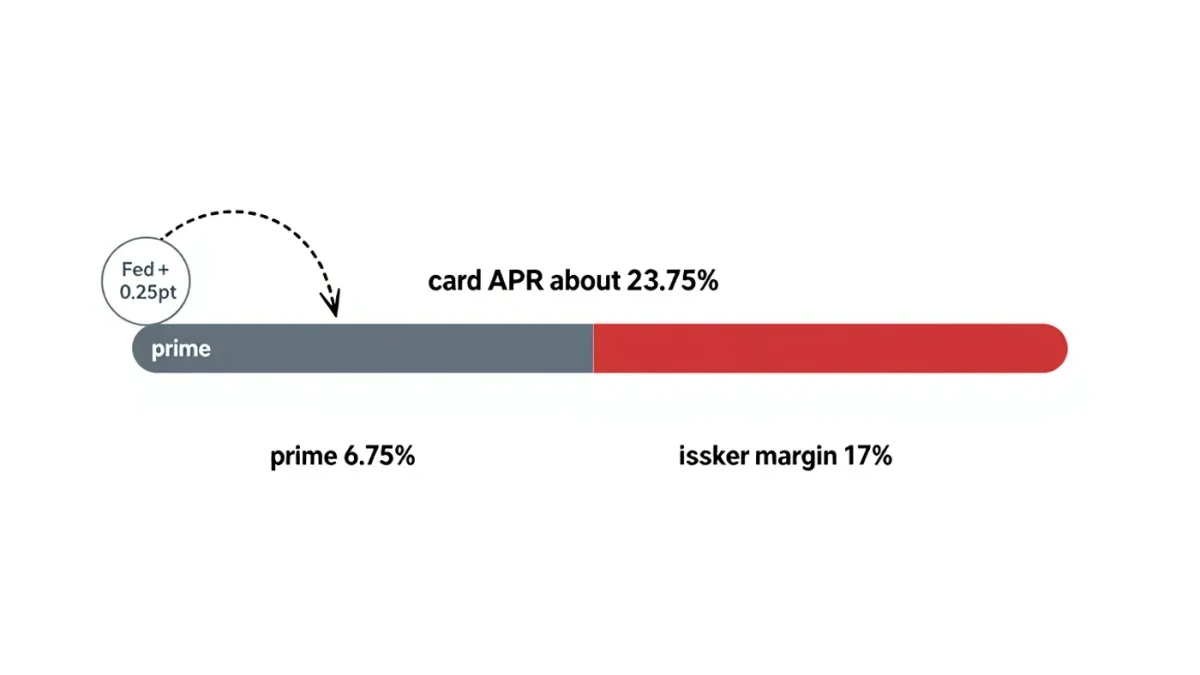
A business credit card and a business line of credit both give you revolving access to borrowed cash, and that similarity is exactly why owners misuse them. The card is a thirty-day payment tool with a rewards engine and a punitive long-term rate; the credit line is a working-capital bridge priced for balances you carry. Choosing by convenience rather than structure is how a seasonal inventory purchase ends up riding a card APR north of 20 percent, per Consumer Financial Protection Bureau reporting on card pricing. Orer News publishes information, not financial advice.
The practical split: put on the card what you can pay in full when the statement closes; draw on the credit line what will take 60 days to six months to earn back.
How is pricing actually different?
Business cards generally come with no annual fee options, rewards on ordinary spending, and an interest rate you should almost never experience because carrying a balance is the failure mode. Business credit lines price closer to a loan — typically prime-based floating rates with a margin set by your financials — plus sometimes an annual fee or a draw fee. The rate is usually materially cheaper than a card's, but there is no float: interest starts when you draw. So the card's real product is up-to-55-days free financing plus rewards; the line's real product is affordable time.
What do limits and reporting look like?
Credit lines are underwritten on business financials — bank statements, tax returns, receivables — and limits are typically larger, from $25,000 into the millions at banks. Business cards are usually underwritten heavily on the owner's personal credit, and many issuers report the account on the owner's personal file, which can affect personal utilization ratios. Neither is a corporate card in the charge-card sense unless specifically structured that way; assume a personal guarantee on both at the small-business end of the market.
When is a card genuinely the right tool?
Recurring operating spend — software, fuel, supplies, ad spend — belongs on a card paid in full monthly: the rewards are real margin, the float smooths weekly timing, and per-employee cards with limits turn expense management into a report instead of an envelope system. Cards also preserve the credit line for the job it exists for. The danger pattern is using the card for inventory ahead of a season you are guessing about; if the season disappoints, the balance does not care, and 25-plus percent compounding interest converts a slow quarter into a hole that takes years to climb out of.
When is the credit line the right tool?
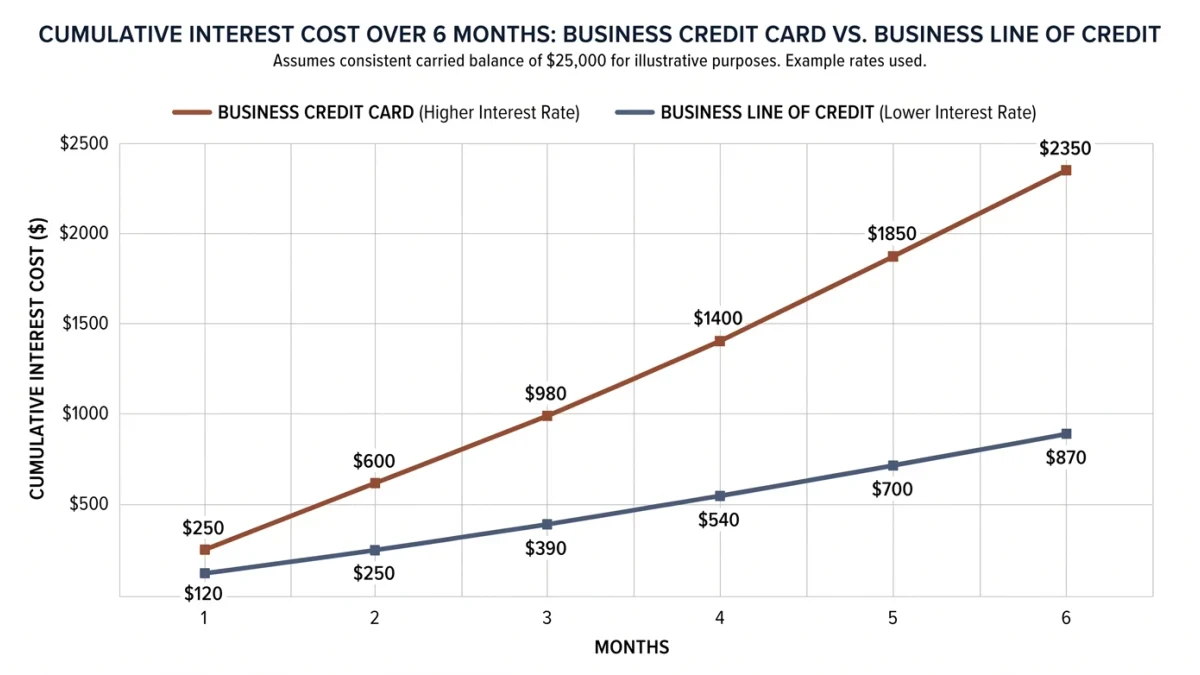
Working-capital timing gaps — payroll between contract payments, inventory purchased against confirmed orders, a deposit required to lock a supplier price. Because the line is priced for carrying, its total cost on a three-month draw is typically a fraction of a card's, and paying it back restores the availability for the next gap. The discipline that keeps lines healthy is treating draws as matched to identifiable inflows rather than as general top-ups for an unprofitable cost structure — a line masks losses for a while and then amplifies them.
| Feature | Business credit card | Line of credit |
|---|---|---|
| Best for | Monthly spend paid in full | 60-day-plus working-capital gaps |
| Interest starts | Only if balance carried | At each draw |
| Typical pricing | High APR, rewards, no-fee options | Floating rate near loan levels |
| Underwriting basis | Heavily personal credit | Business financials |
| Rewards | Yes | Rarely |
Used together, the two instruments cover each other's weaknesses: the card monetizes ordinary spending, and the line carries the timing gaps that would otherwise rot on the card. The one-sentence rule — full payment on the card, matched draws on the line — is most of the strategy.